
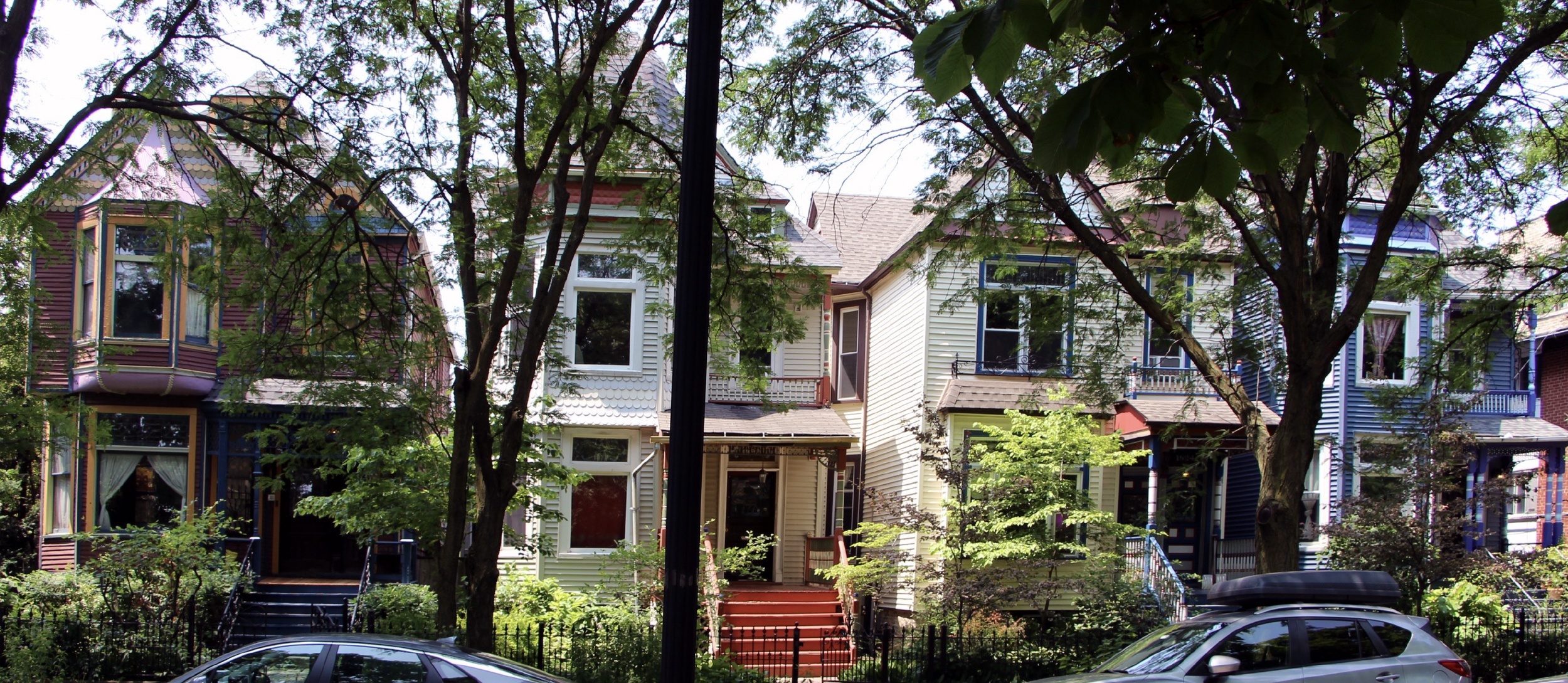
Boulevard Landmark District Extension Project
The “Logan Square Boulevards District” is a significant part of our community's history and character. The Boulevard Landmark builds on decades of historic preservation work and reflects the ongoing commitment of the 26th Ward to maintaining the unique identity of our neighborhoods.

-
Encourage sustainable development that respects the character of our community.
Safeguard historically and architecturally significant features of the area from demolition and erasure.
Foster neighborhood pride and stability.
-
The current Logan Square Boulevards District was designated a Chicago Landmark District in 2005.
Located on Chicago's Northwest Side, the Logan Square Boulevards District encompasses the largest and best-preserved residential streetscapes along Chicago's lushly landscaped boulevards. The boulevards are lined with handsome single-family residences, two- and three-flats, small apartment buildings, commercial, institutional, and religious buildings that exemplify the visual character and quality of late-nineteenth and early-twentieth century architecture in Chicago's neighborhoods… Most buildings in the Logan Square Boulevards District were built after Chicago's annexation of Logan Square in 1889.”


Extending the Logan Square Boulevards District
The extension of the “Logan Square Boulevards District” from Humboldt Boulevard & Cortland to Sacramento & Augusta Blvd was passed by City Council on February 18, 2026.
-
An initial survey of the expansion area found approximately 65 Buildings along Humboldt Boulevard from Cortland to North Avenue and the Park.
These buildings are mostly residential and were built between the 1880s and 1929.
A variety of architectural styles used were popular during the late 19th and early 20th centuries.
The landscaped wide boulevard provides a distinct sense of place.
-
There are approximately 30 Buildings on the east side of Sacramento Boulevard.
They are mostly residential and built between the 1880s and 1929.
A variety of architectural styles used were popular during the late 19th and early 20th centuries.


What does a landmark district mean for the community at large?
• City-wide and National recognition of the community’s historic, architectural, and cultural heritage
• Preservation of existing character and building expand
• Reduce the number of demolitions
• Review of new construction to ensure compliance
Frequently Asked Questions from Property Owners
-
When a property is proposed for Chicago Landmark status, and after its designation, all building permit applications are evaluated to determine their impact on the “significant historical and architectural features” of the property. Any work on these features must be approved by the Commission on Chicago Landmarks. These significant features are identified at the beginning of the designation process and codified in the City Council’s designation ordinance. For most landmark districts, significant features typically include exterior building elevations visible from the public right-of-way, except in cases involving demolition.
-
No additional city permits are required for landmark buildings. The Commission reviews permits as part of the normal building permit process. Most permits for landmark properties are approved within one day. Routine maintenance, such as painting and minor repairs, does not require a permit. Additionally, the City’s Rehabilitation Code includes a special historic preservation provision, allowing flexibility in applying the Building Code to preserve significant features of historic buildings. For more information, contact the Historic Preservation staff.
-
The Commission evaluates permit applications based on established criteria detailed in the Rules and Regulations of the Commission on Chicago Landmarks. These criteria are grounded in the U.S. Secretary of the Interior’s Standards for Rehabilitation of Historic Buildings. Policies regarding rehabilitation work, including guidelines for alterations to historic buildings and new construction, are also available from the Historic Preservation staff.
-
The Commission does not have jurisdiction over zoning. However, it can recommend adjustments, such as reductions in required setbacks, to ensure that the character of a landmark district is maintained.
-
Studies show that landmark designation generally does not negatively impact property values and may even enhance them. Many buyers view landmark designation as an asset, and it is often highlighted in real estate listings. Landmark designation does not directly affect property valuations by the Cook County Assessor’s Office or tax rates.
-
Landmark status enhances a building’s prestige, increases property value, and helps stabilize neighborhoods. Designated properties may also be eligible for economic incentives at the federal, state, and local levels. Contact the Historic Preservation staff for more information on these programs.